<?xml version="1.0" encoding="utf-8"?><feed xmlns="http://www.w3.org/2005/Atom" ><generator uri="https://jekyllrb.com/" version="3.10.0">Jekyll</generator><link href="https://huang-jian.com/feed.xml" rel="self" type="application/atom+xml" /><link href="https://huang-jian.com/" rel="alternate" type="text/html" /><updated>2025-12-08T21:55:33-05:00</updated><id>https://huang-jian.com/feed.xml</id><title type="html">Jian Huang</title><subtitle>Jian&apos;s homepage</subtitle><author><name>Jian Huang</name><email>jianhuang@umass.edu</email></author><entry><title type="html">Successfully defened my doctorate thesis</title><link href="https://huang-jian.com/posts/2025/05/defense/" rel="alternate" type="text/html" title="Successfully defened my doctorate thesis" /><published>2025-05-28T00:00:00-04:00</published><updated>2025-05-28T00:00:00-04:00</updated><id>https://huang-jian.com/posts/2025/05/blog-post-8</id><content type="html" xml:base="https://huang-jian.com/posts/2025/05/defense/"><![CDATA[<p align="justify">Spending five year or so doing computational biophysics research in Prof. Jianhan Chen's lab, I have successfully completed my PhD dissertation defense and have officially become a PhD in computational biophysics.</p>
<p><br /><a href="/posts/2025/05/defense/" class="image" id="defense-1"><img src="/images/news/defense-1.png" height="250" width="400" /></a><br /></p>

<p>I want to express my deepest gratitude to Prof. Jianhan for his guidance and supervision during my PhD program. Thanks to him, I had many valuable opportunities to work in the field of computational biophysics, including molecular mechanism studies of ion channel functions, coarse-grained simulations for protein domain interactions as well as Al-driven ensemble generative modeling. I could not have done any of those without his tremendous and unconditional supports. I would like to also thank many other people, my dissertation committee members, all my lab members, my dear friends and family members for their supports in various aspects.</p>

<p><br /><a href="/posts/2025/05/defense/" class="image" id="defense-2"><img src="/images/news/defense-2.png" height="250" width="400" /></a><br />
<br /><a href="/posts/2025/05/defense/" class="image" id="defense-2"><img src="/images/news/defense-3.png" height="250" width="400" /></a><br />
<br /><a href="/posts/2025/05/defense/" class="image" id="defense-2"><img src="/images/news/defense-5.png" height="250" width="400" /></a><br /></p>

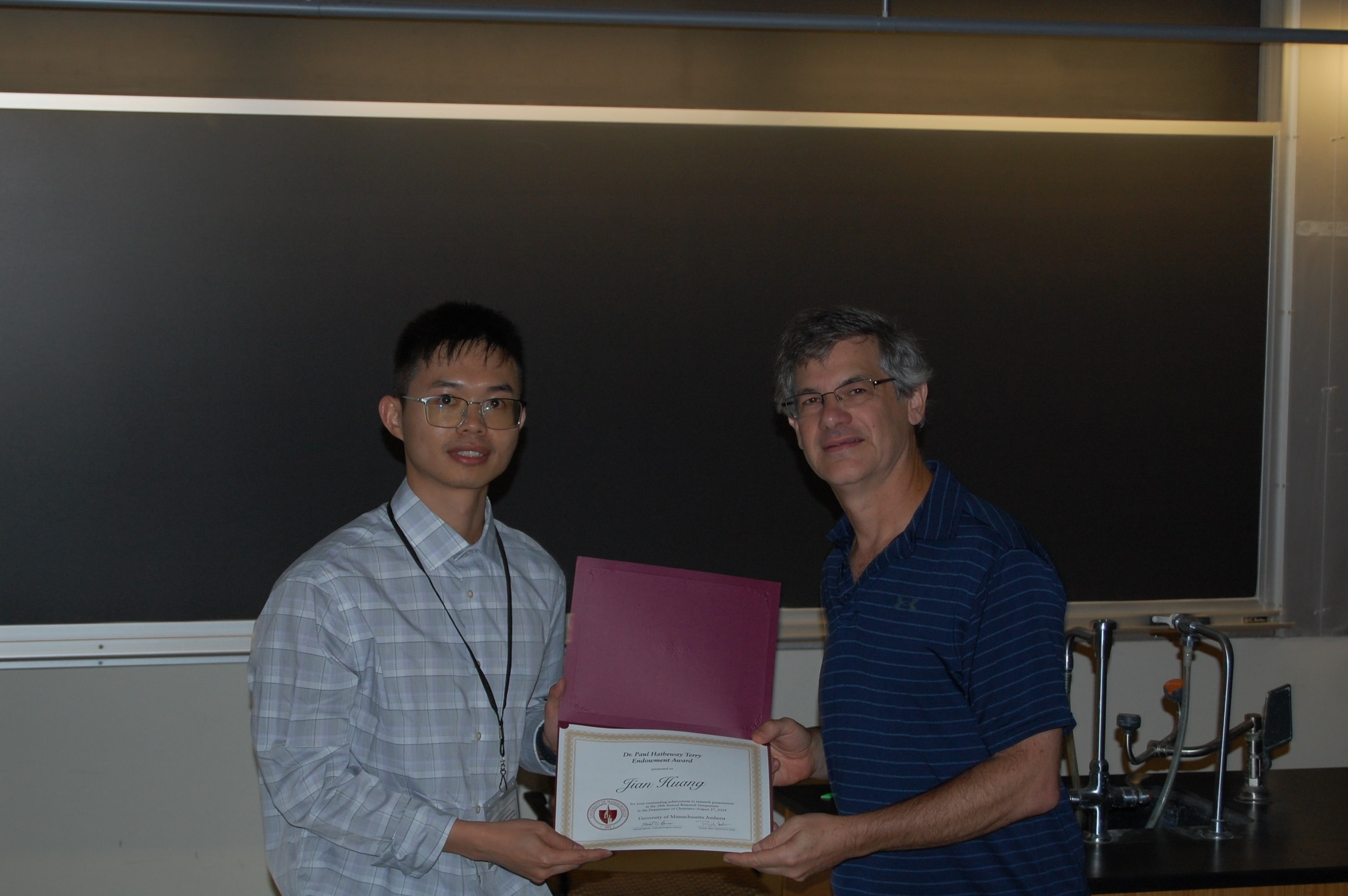
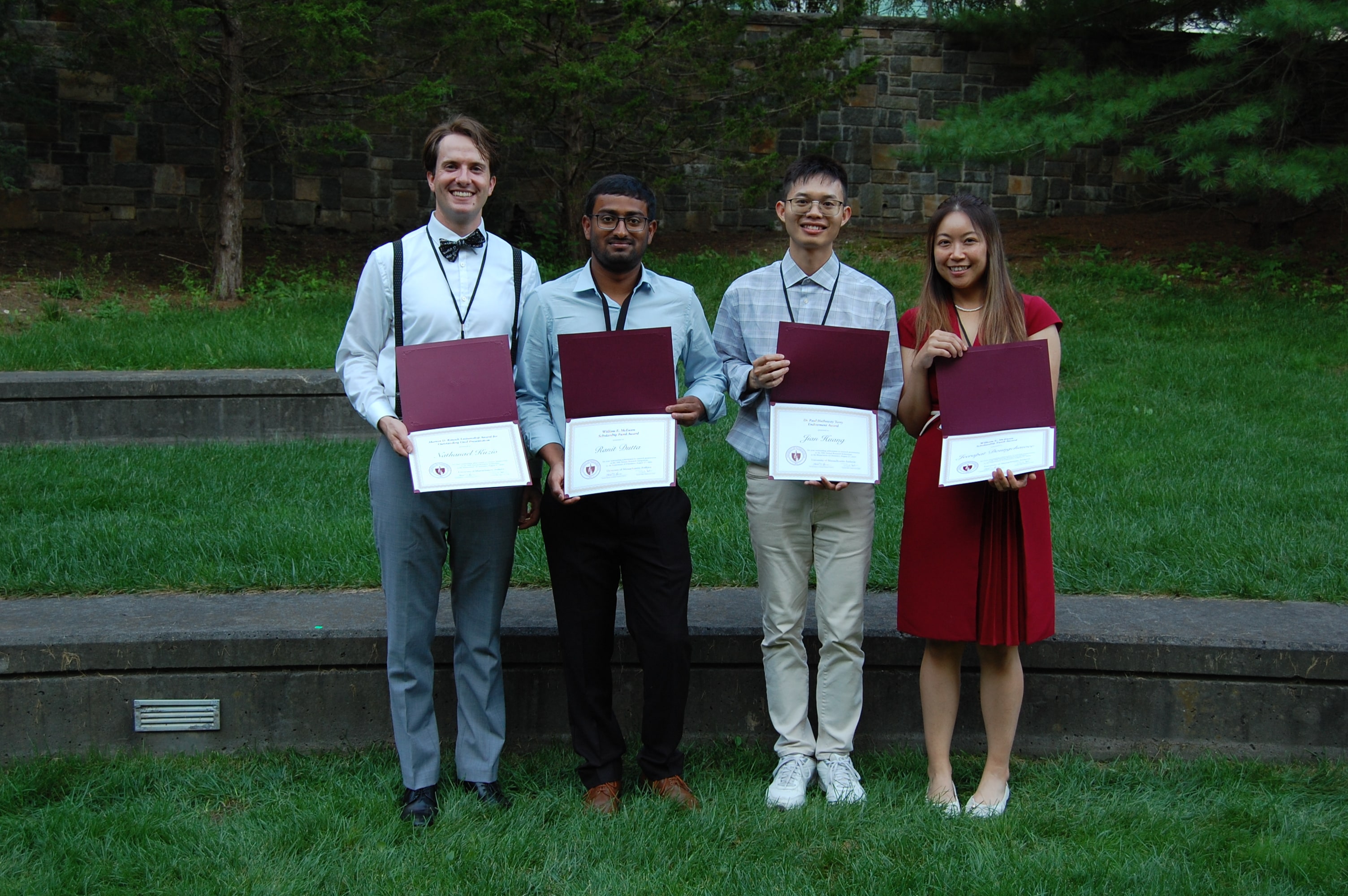
<p>Finishing the PhD study was indeed a highly rewarding journey where I gained scientific skills, mental strength, and friendships.</p>]]></content><author><name>Jian Huang</name><email>jianhuang@umass.edu</email></author><category term="individual" /><category term="gradschool" /><summary type="html"><![CDATA[Spending five year or so doing computational biophysics research in Prof. Jianhan Chen's lab, I have successfully completed my PhD dissertation defense and have officially become a PhD in computational biophysics.]]></summary></entry><entry><title type="html">Won the 2nd place research presentation in the 2024 annual Chemistry ResearchFest event</title><link href="https://huang-jian.com/posts/2024/09/researchfest/" rel="alternate" type="text/html" title="Won the 2nd place research presentation in the 2024 annual Chemistry ResearchFest event" /><published>2024-09-02T00:00:00-04:00</published><updated>2024-09-02T00:00:00-04:00</updated><id>https://huang-jian.com/posts/2024/09/blog-post-7</id><content type="html" xml:base="https://huang-jian.com/posts/2024/09/researchfest/"><![CDATA[<p align="justify">After finished my 3-month internship at Merck, I attended the annual Researchfest event held by the Chemistry department of UMass Amherst. Luckily, I was selected as one of four presentators in this event as the representatives to show research in the department. I won the second place for the presentation and was awarded the <b>Dr. Paul Hatheway Terry Endowment Award as first-runner up </b></p>
<p><br /><a href="/posts/2024/09/researchfest/" class="image" id="researchfest"><img src="/images/researchfest.jpg" height="300" width="700" /></a><br /></p>

<p align="justify">
The annual ResearchFest in the Chemistry department is almost the biggest event of the whole year. In the ResearchFest event, graduate students from the department will participate in poster presentations or luckily get selected as the key presentators to present our fascinating research. Judges, usually our dear faculty members, will grade the quality of the presentation and science for all presentations, based on which students will win awards. Super fun! You can get more information from: <a href="https://www.umass.edu/chemistry/researchfest">UMass Chemistry ResearchFest</a>.
</p>

<p align="justify">
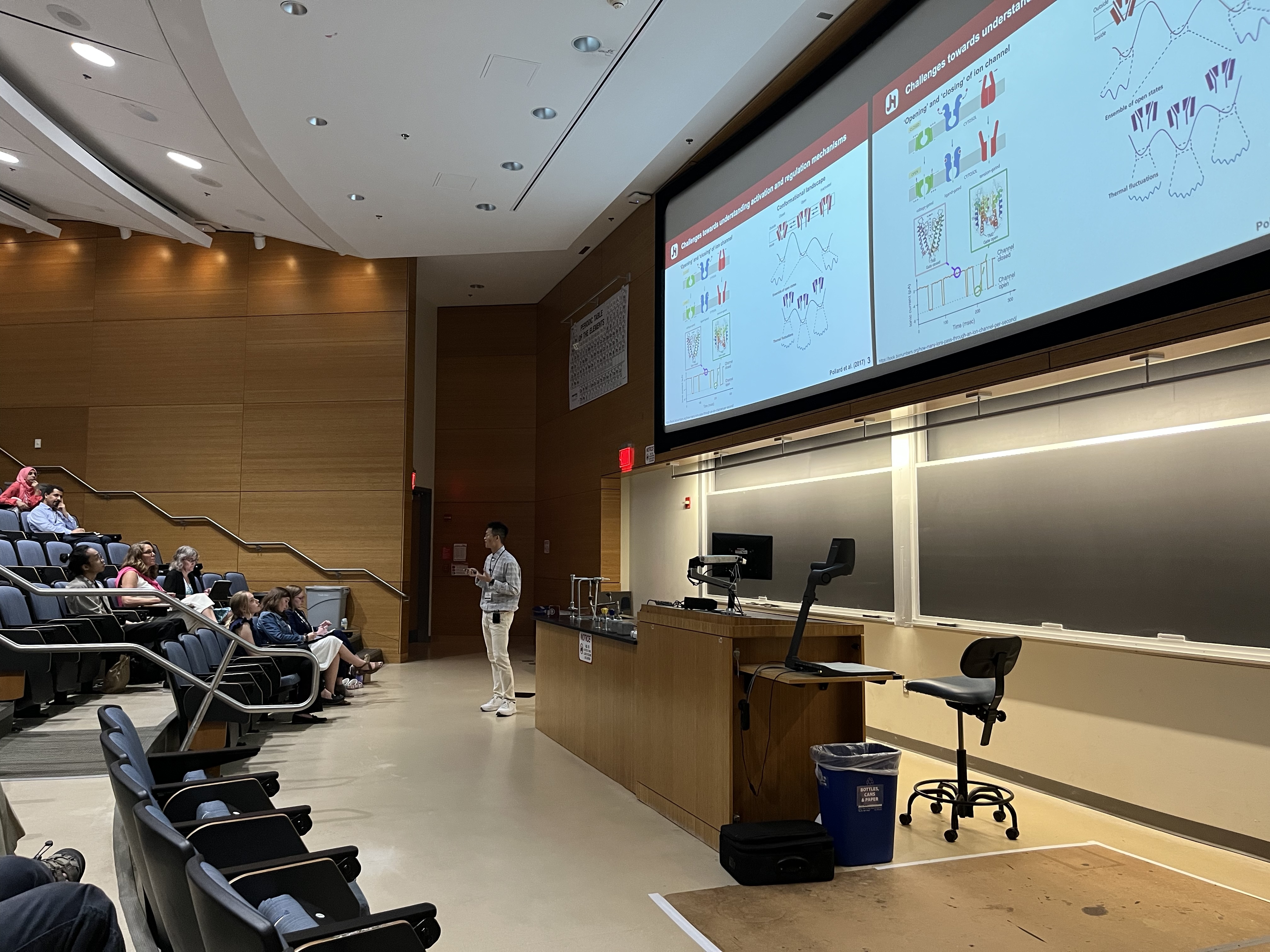
In the event this year, I was selected as one of the key presentator to give a presentation to the whole department, including new coming graduate students. I focused the talk on the gating mechanisms of ion channels.
</p>

<p><br /><a href="/posts/2024/09/researchfest/" class="image" id="researchfest-2"><img src="/images/researchfest2.jpg" height="300" width="700" /></a><br /></p>
<p align="center">
   <b>Jian in the presentation</b> 
</p>

<p><br /><a href="/posts/2024/09/researchfest/" class="image" id="researchfest-4"><img src="/images/researchfest4.jpg" height="300" width="700" /></a><br /></p>
<p align="center">
   <b>Jian was awarded the 2nd place for the presentation</b> 
</p>

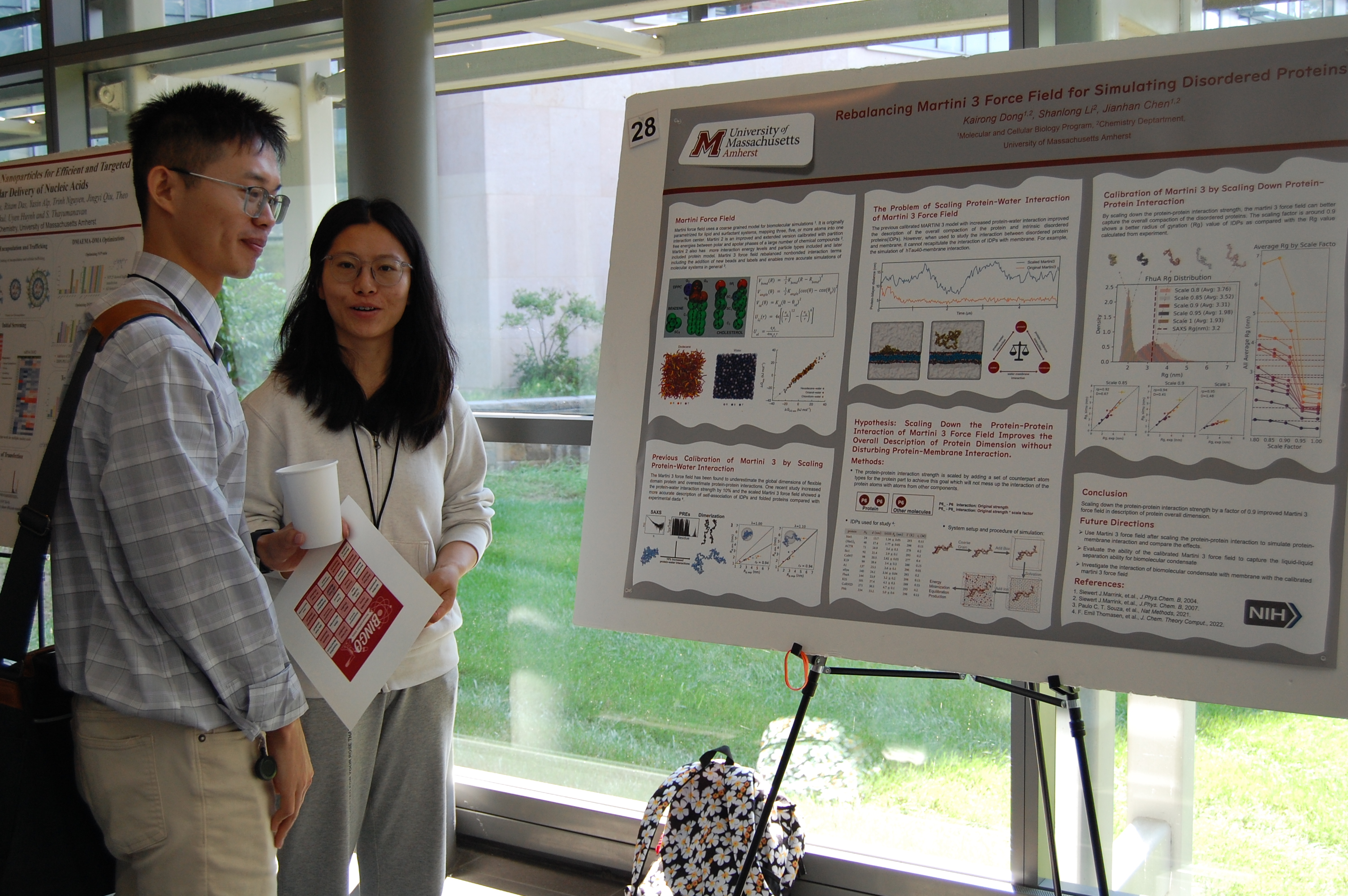
<p align="justify">
  I also participated in the post presentation section as one of the many audience. Always nice to hear people talking about exciting science projects.
</p>

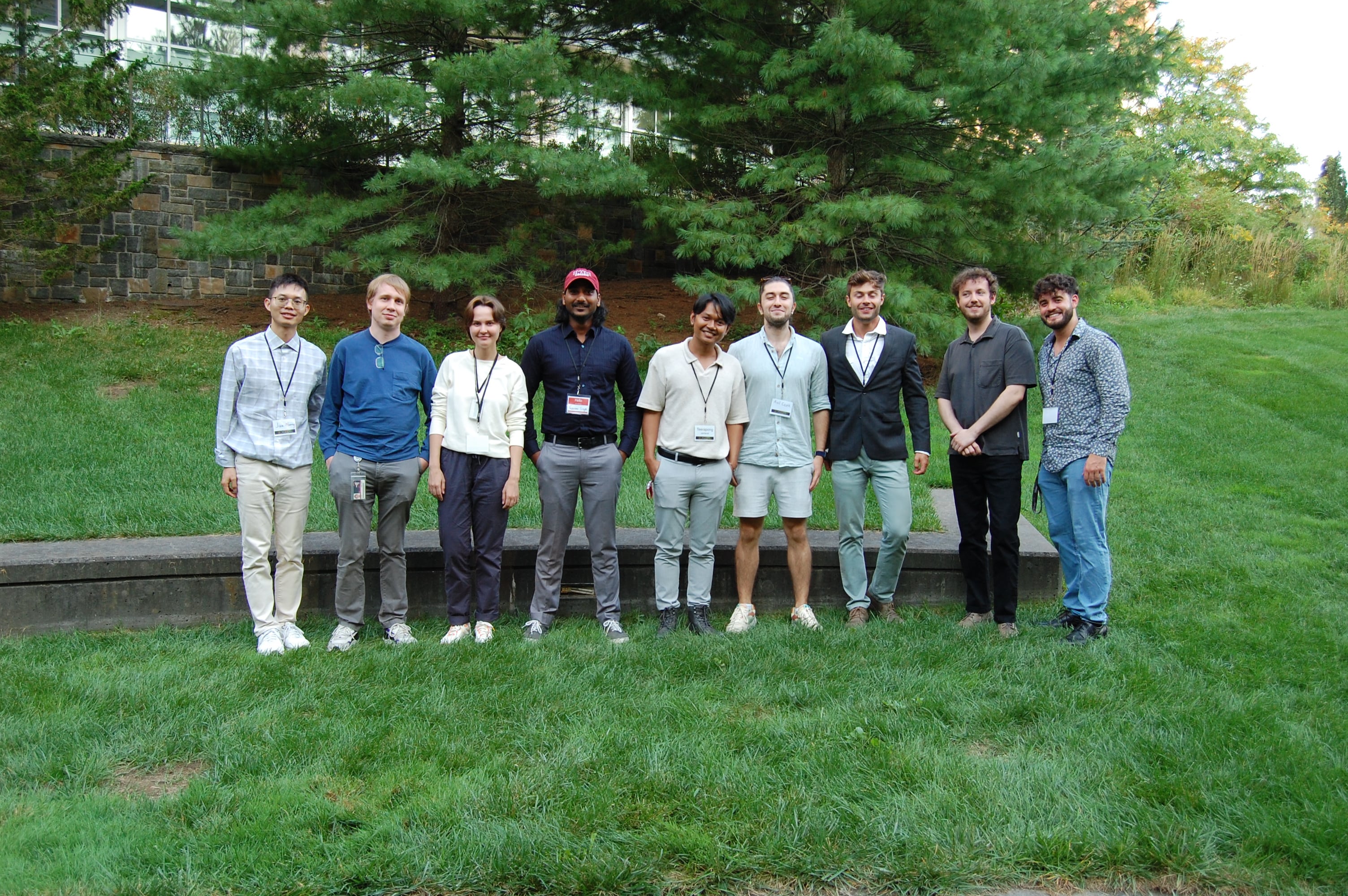
<p><br /><a href="/posts/2024/09/researchfest/" class="image" id="researchfest-3"><img src="/images/researchfest3.jpg" height="300" width="700" /></a><br /></p>

<p><br /><a href="/posts/2024/09/researchfest/" class="image" id="researchfest-5"><img src="/images/researchfest5.jpg" height="300" width="700" /></a><br /></p>
<p align="center">
   <b>The 2021-batch graduate students</b> 
</p>

<hr />

<p align="justify">
I really want to thank my professor Jianhan Chen who always gives me great suggestions and provides me with many opportunities; my mentor Mahdieh Yazdani (during merck internship) who help me with my researchfest presentation, and all my labmates who have always been supportive.
</p>]]></content><author><name>Jian Huang</name><email>jianhuang@umass.edu</email></author><category term="individual" /><category term="gradschool" /><summary type="html"><![CDATA[After finished my 3-month internship at Merck, I attended the annual Researchfest event held by the Chemistry department of UMass Amherst. Luckily, I was selected as one of four presentators in this event as the representatives to show research in the department. I won the second place for the presentation and was awarded the Dr. Paul Hatheway Terry Endowment Award as first-runner up]]></summary></entry><entry><title type="html">Published Paper: Targeting TRP Channels: Recent Advances in Structure, Ligand Binding and Molecular Mechanisms</title><link href="https://huang-jian.com/posts/2024/01/trp_channel_review/" rel="alternate" type="text/html" title="Published Paper: Targeting TRP Channels: Recent Advances in Structure, Ligand Binding and Molecular Mechanisms" /><published>2024-01-16T00:00:00-05:00</published><updated>2024-01-16T00:00:00-05:00</updated><id>https://huang-jian.com/posts/2024/01/blog-post-6</id><content type="html" xml:base="https://huang-jian.com/posts/2024/01/trp_channel_review/"><![CDATA[<p align="justify">In this short review, we summarize recent progresses toward understanding the structural basis of TRP channel function, as well as potential ligand binding sites that could be targeted for therapeutics.</p>
<p><br /><a href="/posts/2024/01/trp_channel_review/" class="image" id="trp-review"><img src="/images/trp_review_paper.jpg" height="300" width="700" /></a><br /></p>

<p align="justify">
Transient receptor potential (TRP) channels are a large and diverse family of transmembrane ion channels that are widely expressed, have important physiological roles, and are associated with many human diseases. These proteins are actively pursued as promising drug targets, benefitting greatly from advances in structural and mechanistic studies of TRP channels. At the same time, the complex, polymodal activation and regulation of TRP channels have presented formidable challenges.

A particular focus is on the current understanding of the molecular mechanisms of TRP channel activation and regulation, where many fundamental questions remain unanswered. We believe that a deeper understanding of the functional mechanisms of TRP channels will be critical and likely transformative toward developing successful therapeutic strategies targeting these exciting proteins. This endeavor will require concerted efforts from computation, structural biology, medicinal chemistry, electrophysiology, pharmacology, drug safety and clinical studies.

</p>

<p align="justify">
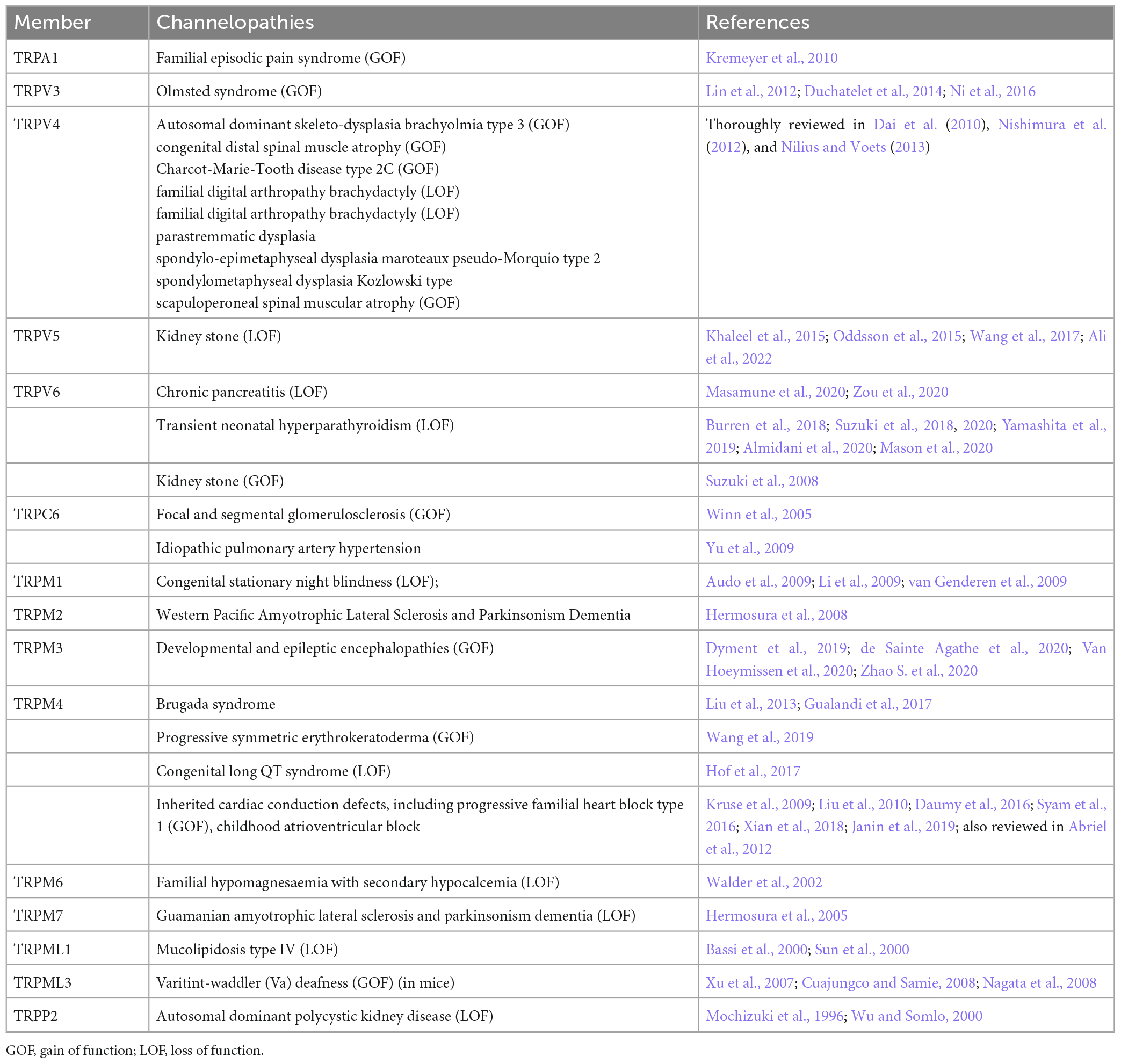
In this work, we first summarized all kinds of TRP-related genetic diseases (channelopathies) to emphasize the necessity of developping TRP-targeting drugs for therapeutics.
</p>

<p><br /><a href="/posts/2024/01/trp_channel_review/" class="image" id="trp-review-2"><img src="/images/trp_review_paper_channelopathies.jpg" height="300" width="700" /></a><br /></p>

<p align="justify">
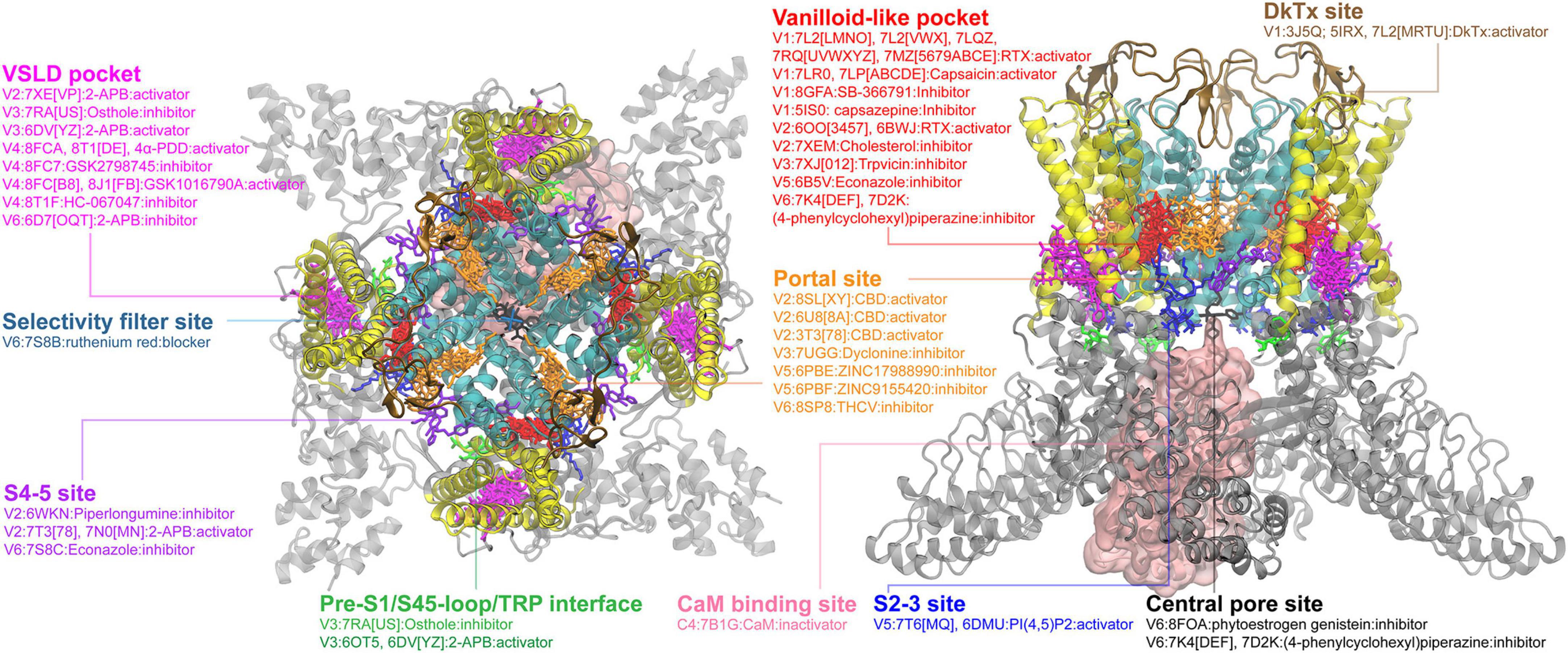
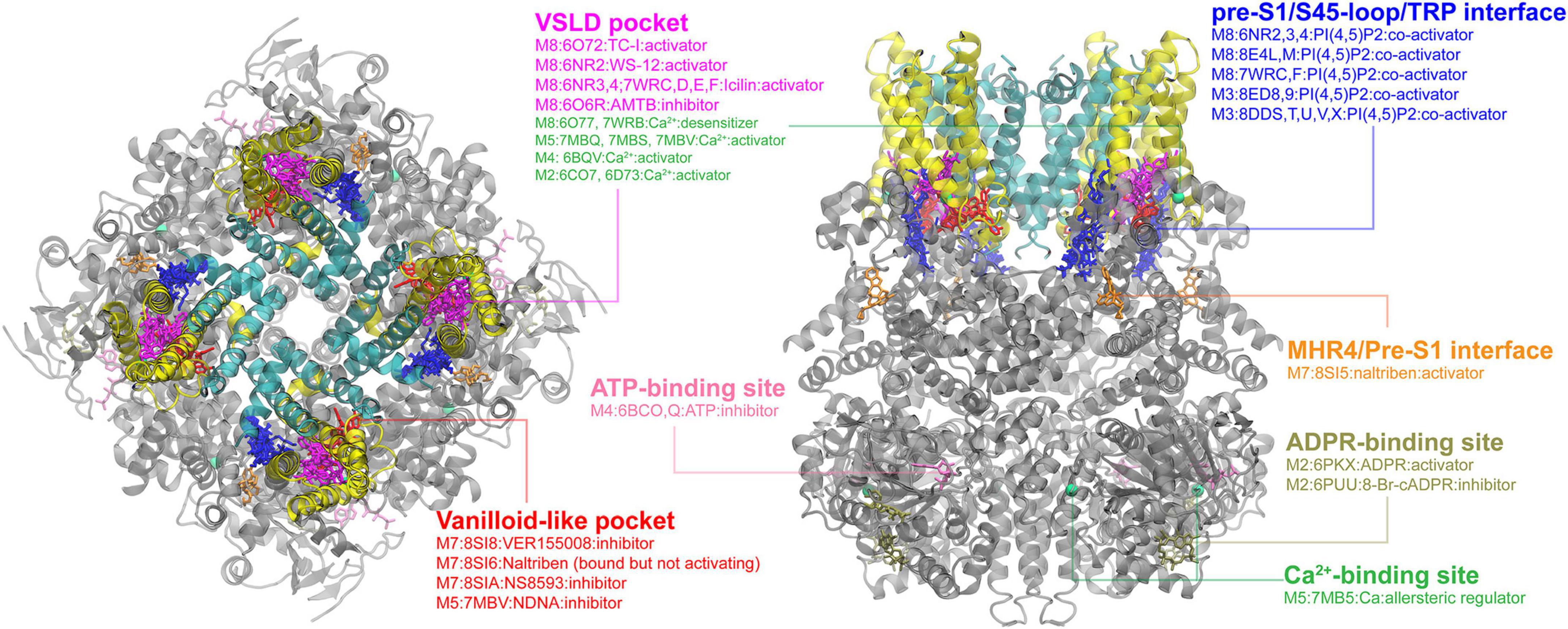
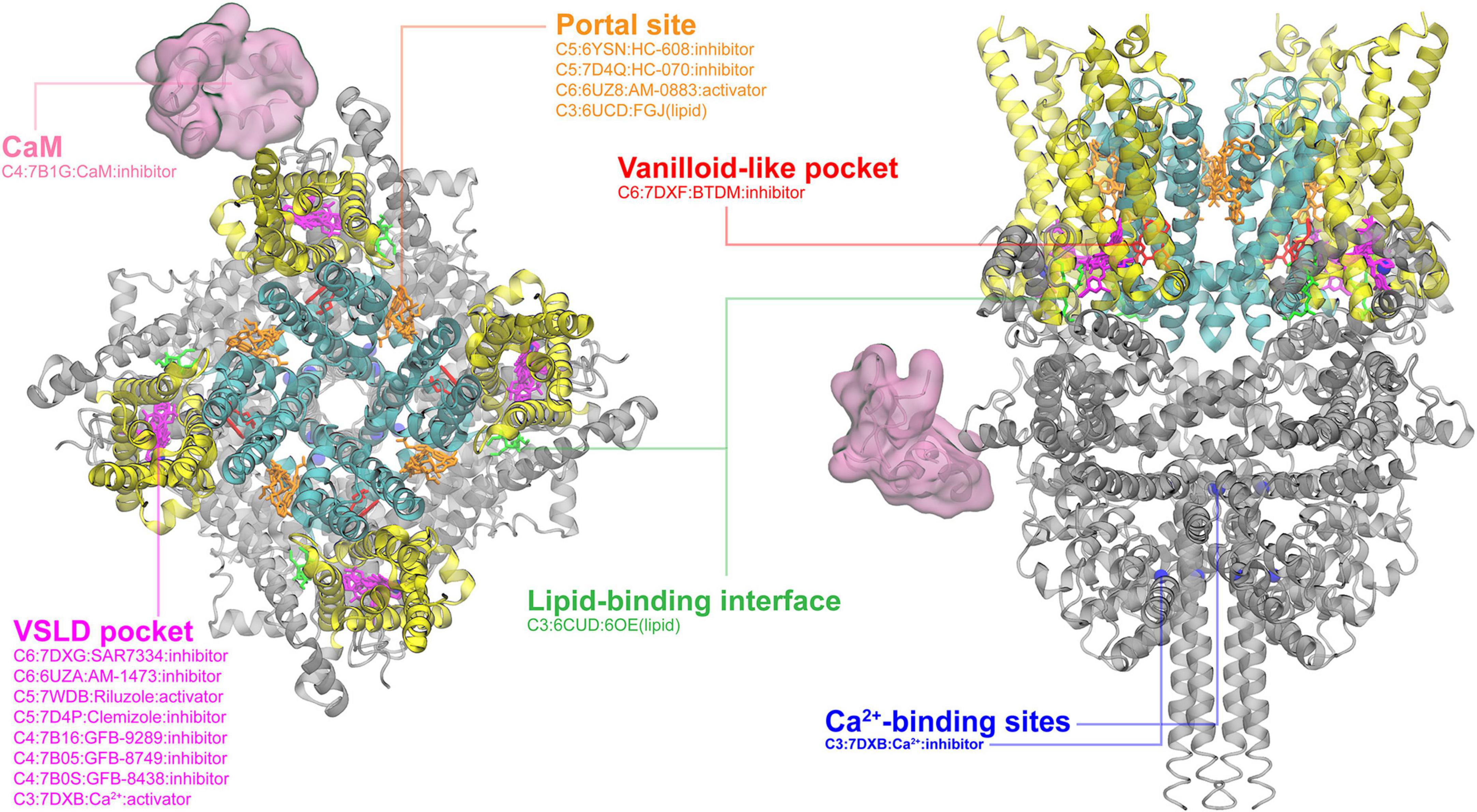
  Then, we went through all six TRP subfamilies to summarize all reported ligand-binding pockets from the currectly available structural data from the PDB database. Below are the figures summarizing TRPM and TRPC binding pockets. Detailed annotations including activation or inhibition are added in the figures. 
</p>

<p><br /><a href="/posts/2024/01/trp_channel_review/" class="image" id="trp-review-3"><img src="/images/trp_review_trpm.jpg" height="300" width="700" /></a><br /></p>

<p align="center">
  <b>Ligand-binding pocket in TRPMs</b>
</p>

<p><br /><a href="/posts/2024/01/trp_channel_review/" class="image" id="trp-review-4"><img src="/images/trp_review_trpc.jpg" height="300" width="700" /></a><br /></p>

<p align="center">
   <b>Ligand-binding pocket in TRPCs</b> 
</p>

<hr />

<p align="justify">
Many thanks to Prof. Jianhan Chen, Mahdieh Yazdani, Aron Korsunsky for their support during the whole manuscript preparation and submission process.
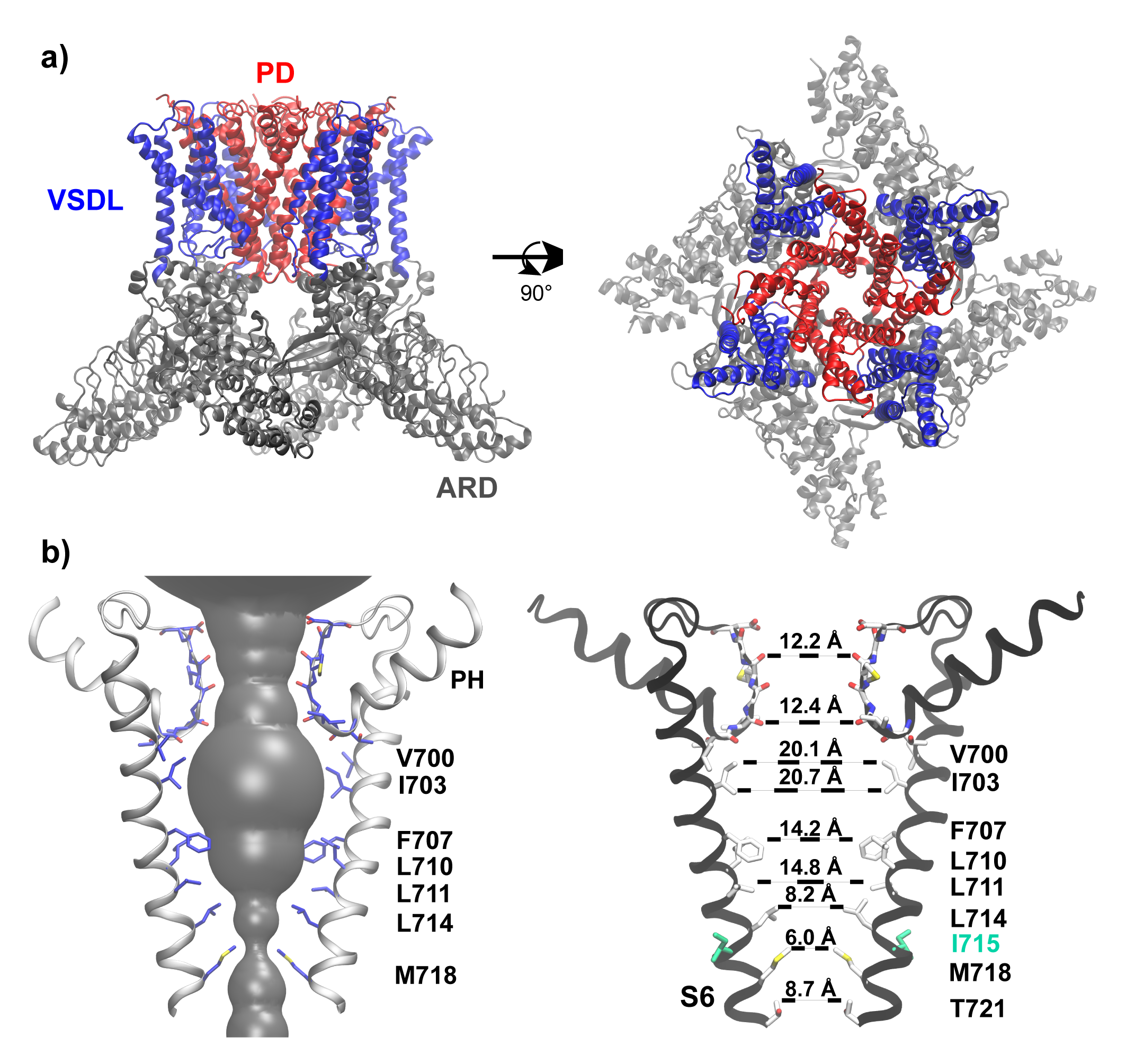
</p>]]></content><author><name>Jian Huang</name><email>jianhuang@umass.edu</email></author><category term="individual" /><category term="gradschool" /><summary type="html"><![CDATA[In this short review, we summarize recent progresses toward understanding the structural basis of TRP channel function, as well as potential ligand binding sites that could be targeted for therapeutics.]]></summary></entry><entry><title type="html">Published Paper: Hydrophobic gating in bundle crossing channels</title><link href="https://huang-jian.com/posts/2023/11/trpv4-hydrophobic-gating/" rel="alternate" type="text/html" title="Published Paper: Hydrophobic gating in bundle crossing channels" /><published>2023-11-07T00:00:00-05:00</published><updated>2023-11-07T00:00:00-05:00</updated><id>https://huang-jian.com/posts/2023/11/blog-post-5</id><content type="html" xml:base="https://huang-jian.com/posts/2023/11/trpv4-hydrophobic-gating/"><![CDATA[<p>Transmembrane ion channels frequently regulate ion permeation by forming bundle crossing of the pore-lining helices when deactivated. The resulting physical constriction is believed to serve as the de facto gate that imposes the major free energy barrier to ion permeation. Intriguingly, many ion channels also contain highly hydrophobic inner pores enclosed by bundle crossing, which can undergo spontaneous dewetting and give rise to a “vapor barrier” to block ion flow even in the absence of physical constriction. Using atomistic simulations, we show that hydrophobic gating and bundle-crossing mechanisms co-exist and complement one and another in the human TRPV4 channel. In particular, a single hydrophilic mutation in the lower pore can increase pore hydration and reduce the ion permeation free energy barrier by about half without affecting the bundle crossing. We believe that hydrophobic gating may play a key role in other bundle-crossing ion channels with hydrophobic inner pores.
<br /><a href="/posts/2023/11/trpv4-hydrophobic-gating/" class="image" id="trpv4-hydrophobic-gating"><img src="/images/trpv4-hydrophobic-gating.png" height="300" width="400" /></a><br /></p>

<p align="justify">
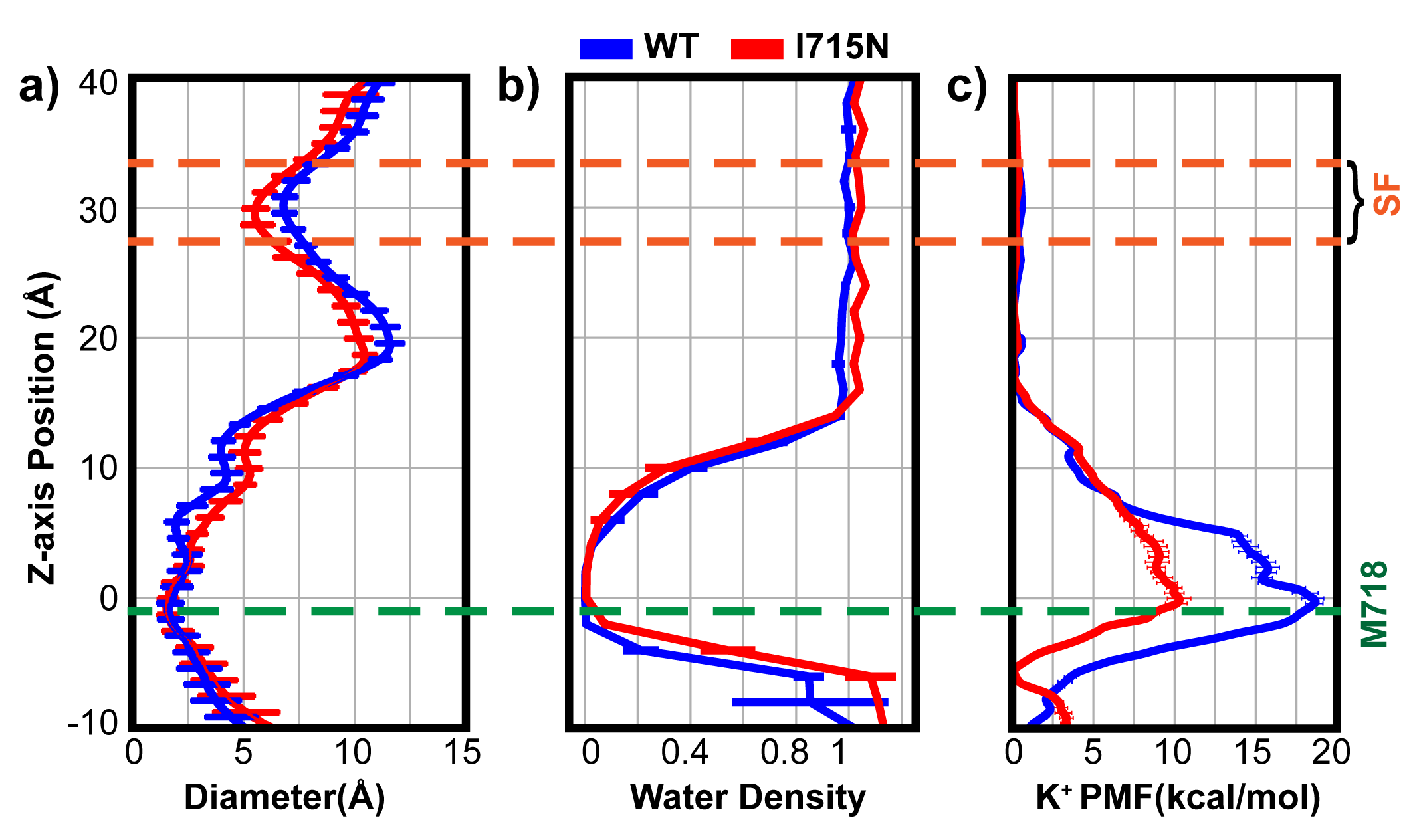
In this work, we performed atomistic molecular dynamics (MD) simulations in explicit solvent to investigate the hydration property of TRPV4 pore in the closed state, and further determined the free energy profile of K+ permeation to identify the location of the actual gate. To dissect the contributions of hydrophobic gating and bundle crossing to channel gating, we analyzed the pore hydration and K+ permeation-free energy properties of a hydrophilic and non-pore-facing mutation I715N near the bundle crossing, which was experimentally found to increase the resting channel activity of TRPV4. Our results strongly support that both bundle-crossing and hydrophobic gating indeed contribute to TRPV4 inactivation. Given the prevalence of hydrophobic inner pores in ion channels, the current study suggests that hydrophobic gating likely plays a more general role than previously thought, regardless of the presence of bundle crossing in the deactivated channel.
</p>

<p><br /><a href="/posts/2023/11/trpv4-hydrophobic-gating/" class="image" id="trpv4-hydrophobic-gating-2"><img src="/images/trpv4-hydrophobic-gating-2.png" height="300" width="700" /></a><br /></p>

<p align="justify">
  The above figure shows that I715N has a significantly smaller barrier compared with the WT. 
</p>
<hr />

<p align="justify">
Many thanks to my supervisor, Jianhan, for his support during the whole manuscript preparation and submission process.
</p>]]></content><author><name>Jian Huang</name><email>jianhuang@umass.edu</email></author><category term="individual" /><category term="gradschool" /><summary type="html"><![CDATA[Transmembrane ion channels frequently regulate ion permeation by forming bundle crossing of the pore-lining helices when deactivated. The resulting physical constriction is believed to serve as the de facto gate that imposes the major free energy barrier to ion permeation. Intriguingly, many ion channels also contain highly hydrophobic inner pores enclosed by bundle crossing, which can undergo spontaneous dewetting and give rise to a “vapor barrier” to block ion flow even in the absence of physical constriction. Using atomistic simulations, we show that hydrophobic gating and bundle-crossing mechanisms co-exist and complement one and another in the human TRPV4 channel. In particular, a single hydrophilic mutation in the lower pore can increase pore hydration and reduce the ion permeation free energy barrier by about half without affecting the bundle crossing. We believe that hydrophobic gating may play a key role in other bundle-crossing ion channels with hydrophobic inner pores.]]></summary></entry><entry><title type="html">Jian passed ORP exam and is now a Ph.D candidate!</title><link href="https://huang-jian.com/posts/2022/12/orp/" rel="alternate" type="text/html" title="Jian passed ORP exam and is now a Ph.D candidate!" /><published>2022-12-17T00:00:00-05:00</published><updated>2022-12-17T00:00:00-05:00</updated><id>https://huang-jian.com/posts/2022/12/blog-post-4</id><content type="html" xml:base="https://huang-jian.com/posts/2022/12/orp/"><![CDATA[<p>Original research proposal (ORP) is an exam designed to test the ability of graduate students to identify significant scientific questions, to develop research proposals based on rationized and reasonable hypotheses, and more importantly to successfully defend the proposal. 
<br /><a href="/posts/2022/12/orp/" class="image" id="orp"><img src="/images/orp.png" height="300" width="700" /></a><br /></p>

<p align="justify">
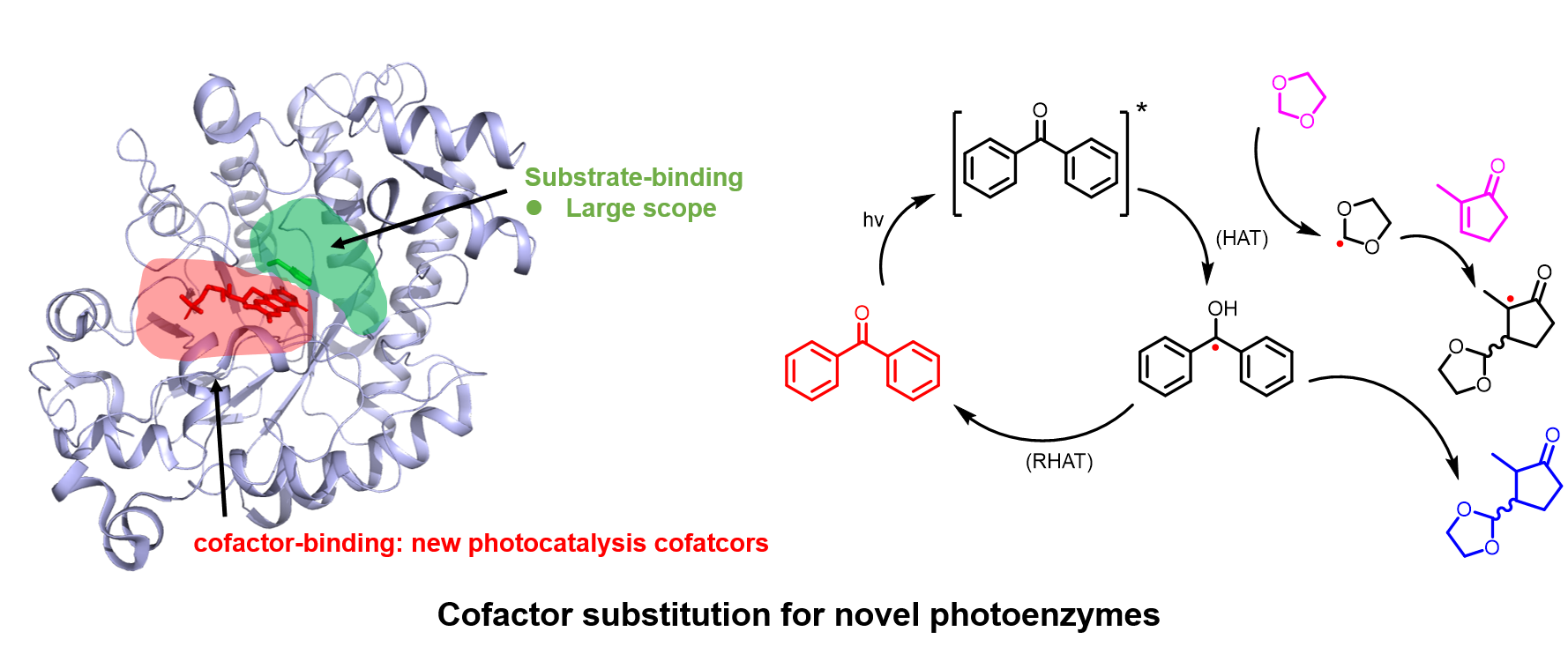
In my proposal, I want to make novel photoenzymes for unnatural transformation. Creating novel enzymes for unnatural transformations is extremely beneficial for industry production of fine organic compound. Creating novel photoenyzmes (the regime of Photo-biocatalysis) can potential combine the advantages of biocatalysis such as efficiency, stereoseletivity and sustainability, and photocatalysis for the highly reactive species and mechanistic versatility.<br />
I propose to use cofactor substitution to replace the natural cofactor in the cofactor-dependent enzymes to gain new-to-nature and controllable reactivities (see the picture above).
  </p>
<hr />

<p align="justify">
Here, I want to say thanks to my supervisor, committee members and lab mates. My lab mates helped me practiced many times for the presentation and gave me lots of useful questions and suggestions. Jianhan and all my committee members were super helpful and gave me lots of constructive suggestions and questions during the defense.
</p>]]></content><author><name>Jian Huang</name><email>jianhuang@umass.edu</email></author><category term="individual" /><category term="gradschool" /><summary type="html"><![CDATA[Original research proposal (ORP) is an exam designed to test the ability of graduate students to identify significant scientific questions, to develop research proposals based on rationized and reasonable hypotheses, and more importantly to successfully defend the proposal.]]></summary></entry><entry><title type="html">received CBI fellowship</title><link href="https://huang-jian.com/posts/2022/06/cbi/" rel="alternate" type="text/html" title="received CBI fellowship" /><published>2022-06-01T00:00:00-04:00</published><updated>2022-06-01T00:00:00-04:00</updated><id>https://huang-jian.com/posts/2022/06/blog-post-2</id><content type="html" xml:base="https://huang-jian.com/posts/2022/06/cbi/"><![CDATA[<p>CBI program (Chemistry-Biology Interface) is a highly competitive UMass-funded and NIH-funded fellowship, aiming at training trainees from different background to advance scientific research “at the interface of chemistry and biology”.
<br /><a href="https://cbi.chem.umass.edu" class="image" id="cbi"><img src="/images/cbi.jpg" height="300" width="700" /></a><br /></p>

<h2 id="what-i-did-so-far-as-a-cbi-trainee">What I did so far as a CBI trainee</h2>

<ol>
  <li>Drug design course
    <ul>
      <li>Understand drug development process, including drug discovery, screening, optimization and clinical trials;</li>
      <li>Computational aided drug discovery and Structural-based drug design;</li>
      <li>Macromolecular drug development, such as antibody, DNA and RNA.</li>
    </ul>
  </li>
  <li>CBI chalk talk
    <ul>
      <li><a href="https://cbi.chem.umass.edu/activities/chalk-talk/">CBI chalk talk</a> is a course that is monthly held to gather CBI community to disscuss cutting edge topics.</li>
    </ul>
  </li>
  <li>attend workshops
    <ul>
      <li>I attended a OPT workshop “Crafting Slides for Engaging Presentations” (Nov 16th). I also made my own <a href="/images/logo9.png">logo</a> and <a href="/files/Jian_umass.thmx">PPT template</a>.</li>
    </ul>
  </li>
  <li>CBI traineeship talk
    <ul>
      <li>As a CBI trainee, I was requested to give a talk to both chemistry and biology students</li>
      <li>The talk topic: <strong>Hydrophobic gating in bundle-crossing ion channels: a case study of TRPV4”</strong></li>
    </ul>
  </li>
  <li>Future plan</li>
</ol>]]></content><author><name>Jian Huang</name><email>jianhuang@umass.edu</email></author><category term="fellowship" /><category term="gradschool" /><summary type="html"><![CDATA[CBI program (Chemistry-Biology Interface) is a highly competitive UMass-funded and NIH-funded fellowship, aiming at training trainees from different background to advance scientific research “at the interface of chemistry and biology”.]]></summary></entry><entry><title type="html">Presenting in Poster Section of 2022 BPS Annual Meeting</title><link href="https://huang-jian.com/posts/2022/02/bps/" rel="alternate" type="text/html" title="Presenting in Poster Section of 2022 BPS Annual Meeting" /><published>2022-02-19T00:00:00-05:00</published><updated>2022-02-19T00:00:00-05:00</updated><id>https://huang-jian.com/posts/2022/02/blog-post-3</id><content type="html" xml:base="https://huang-jian.com/posts/2022/02/bps/"><![CDATA[<p>The Biophysical Society (BPS) annual meeting is held by international biophysics society, aiming at leading, disseminating and advancing knowledge in biophysics.
<br /><a href="https://www.biophysics.org/" class="image" id="cbi"><img src="/images/bps.jpg" height="300" width="700" /></a><br /></p>

<p>The BPS 2022 66-th annual meeting was held in 19th Feb 2022 at San Francisco, California.<br /></p>

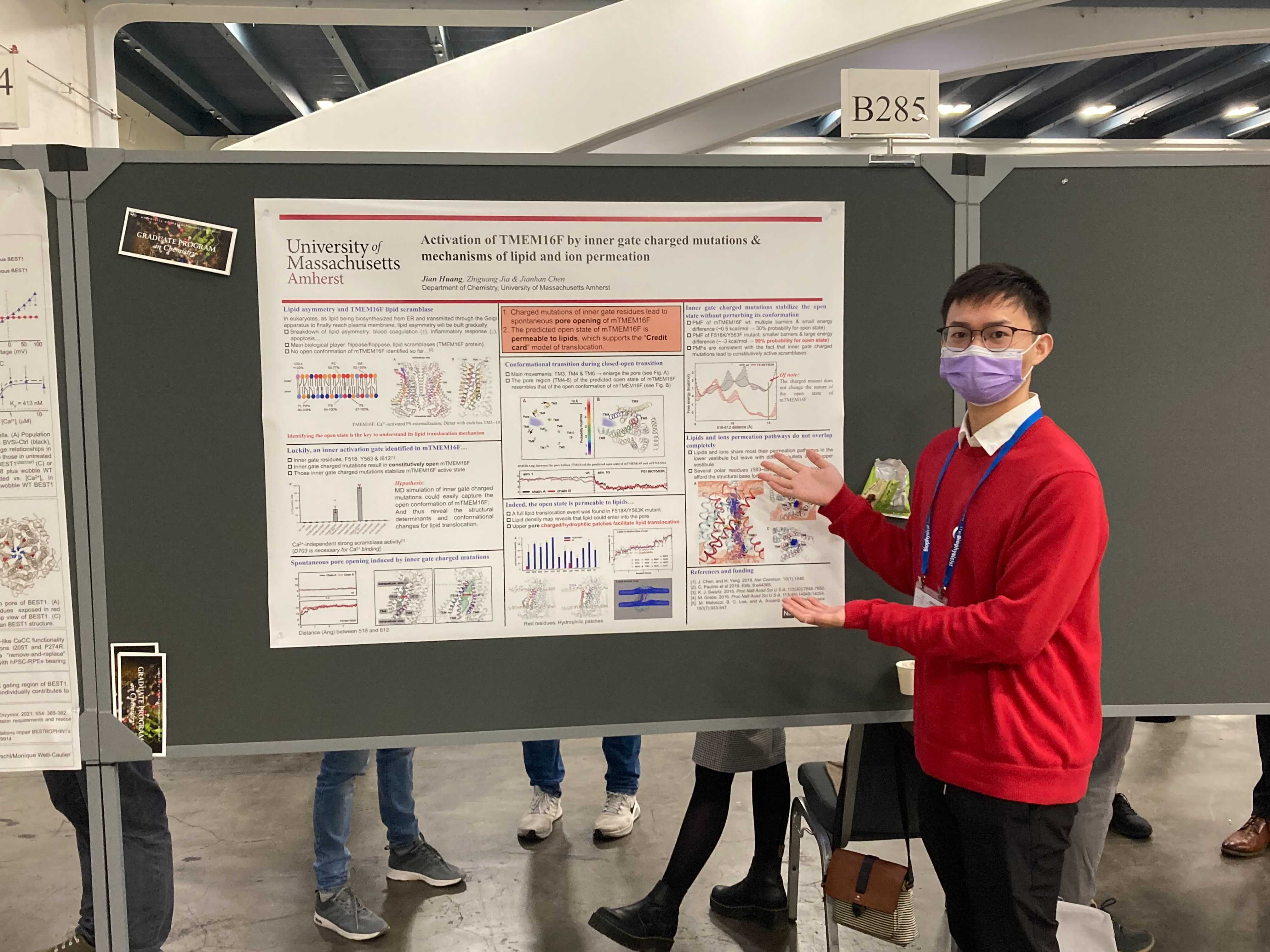
<p><img src="/images/bps_post.jpg" height="200" /></p>

<p>During this meeting, I presented a post about the new findings of TMEM16F, including:</p>

<ol>
  <li>A conductive/open state of mTMEM16F induced by inner gate charged mutations was identified during atomistic simulations. (see <a href="/research/0-TMEM16F">TMEM16F</a>)</li>
  <li>The predicted state is permeable to ions and lipids, which further reveals the ion and lipid pathways (as well as underlying mechanisms) of this protein.</li>
</ol>

<hr />

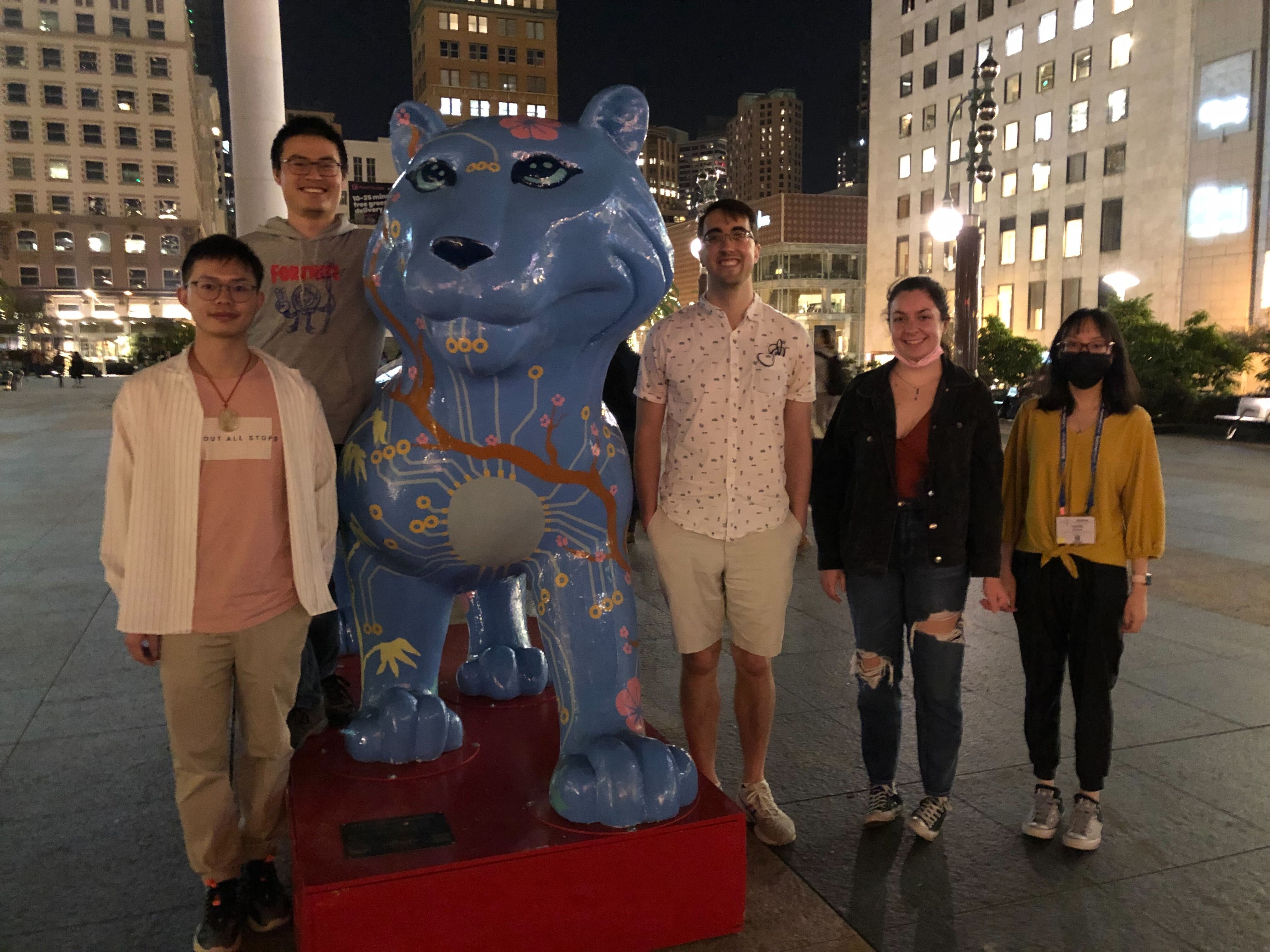
<p>This was a fun trip! All Chen lab members gathered and enjoyed the meeting. We even had a fascinating road trip to get back to MA.</p>

<p><img src="/images/bps_sf_0.jpg" height="200" width="600" /><br />
<em>The frist “reunion” of the Chen lab after each of us arrived at San Francisco, CA.</em></p>

<p><img src="/images/bps_sf_1.jpg" height="200" width="600" /><br />
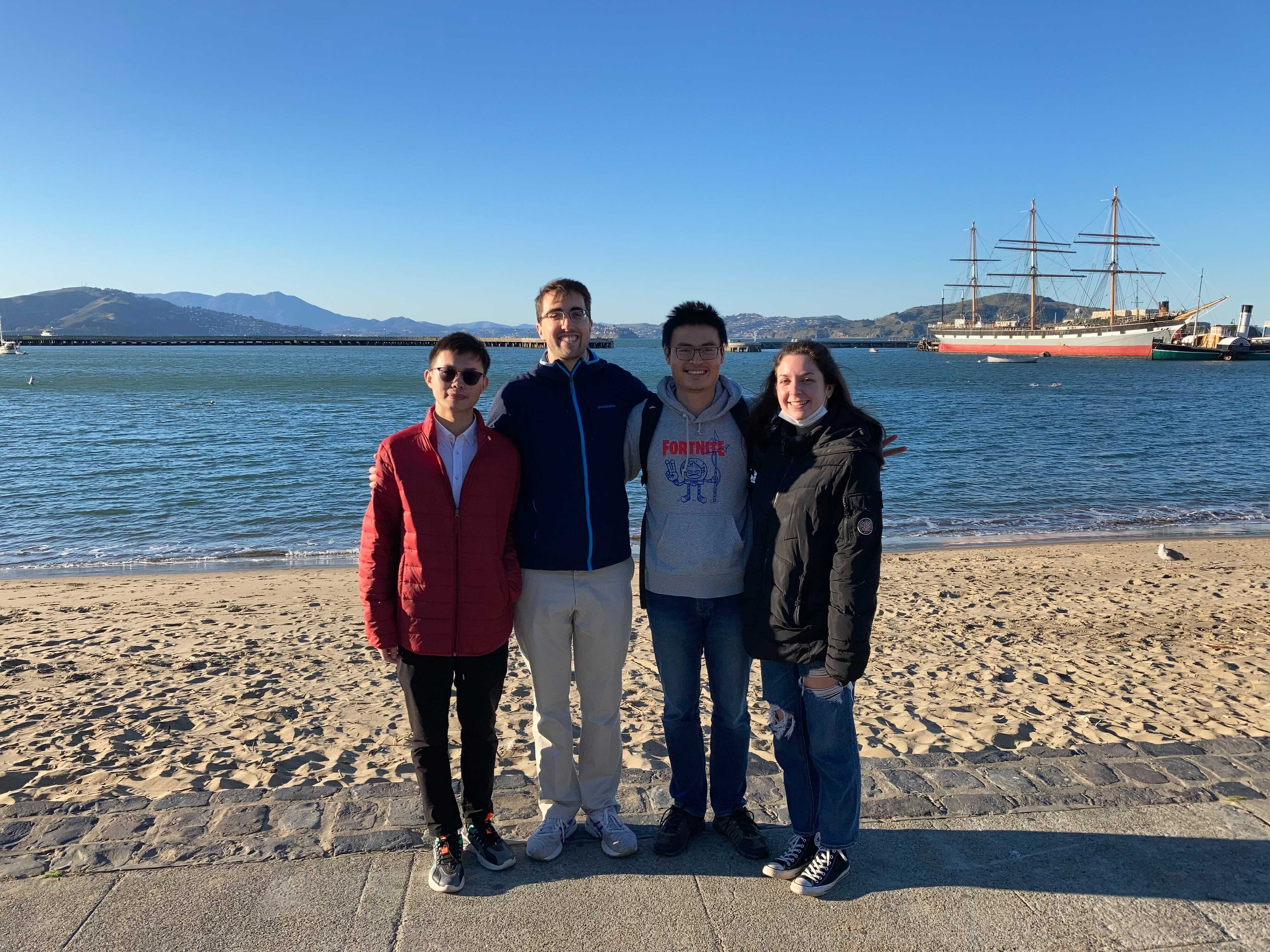
<em>Hiking to the beach (From left to right: Jian, Erik, Xiping &amp; Sam)</em></p>

<p><img src="/images/bps_sf_2.jpg" height="200" width="600" /><br />
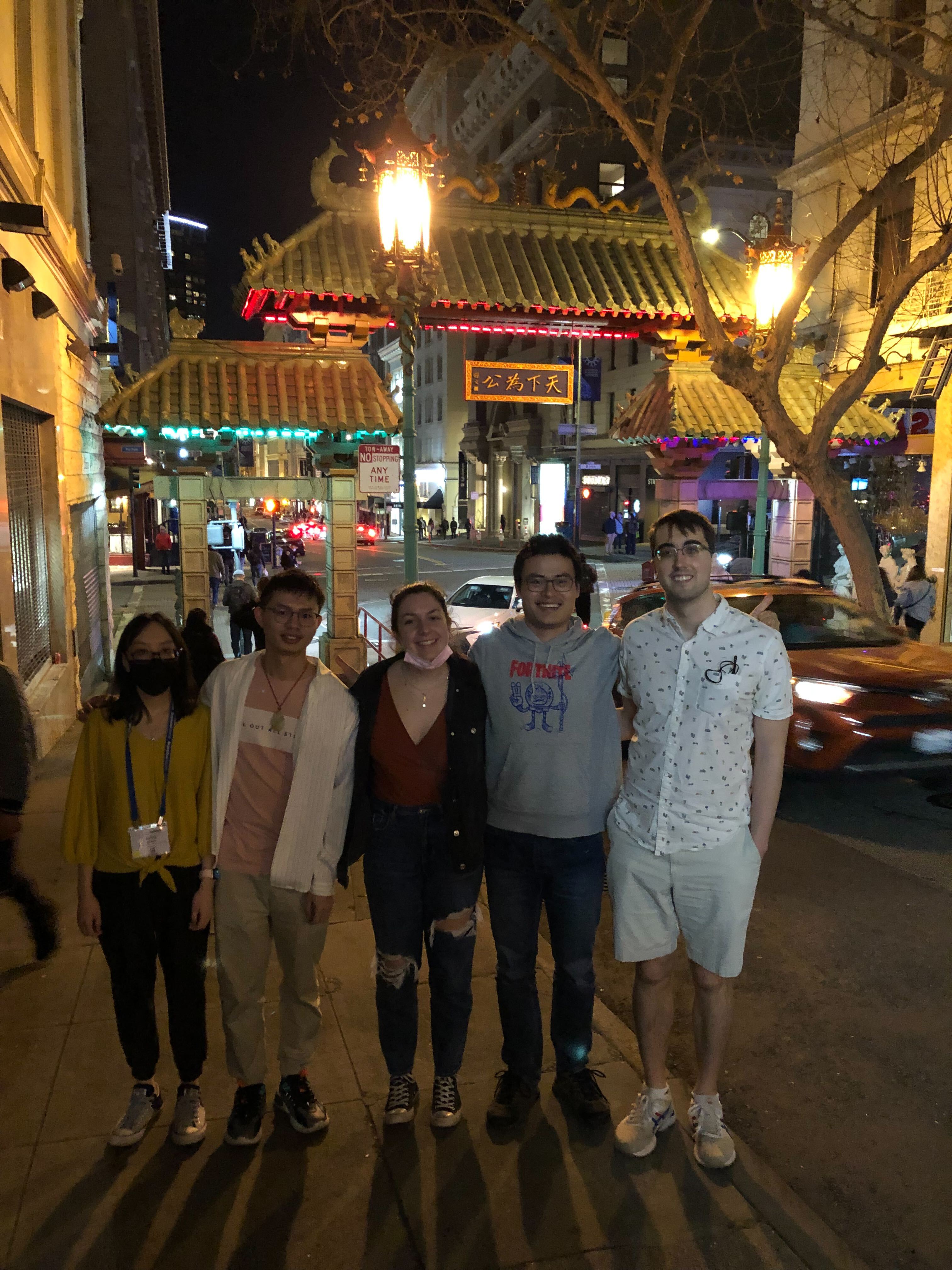
<em>Visiting the Chinatown in San Francisco</em></p>

<p><img src="/images/bps_sf_3.jpg" height="200" width="400" /><br />
<em>Visiting the Chinatown in San Francisco (in the front gate)</em><br />
<strong>Everything under the sky belongs to all – 天下为公</strong></p>

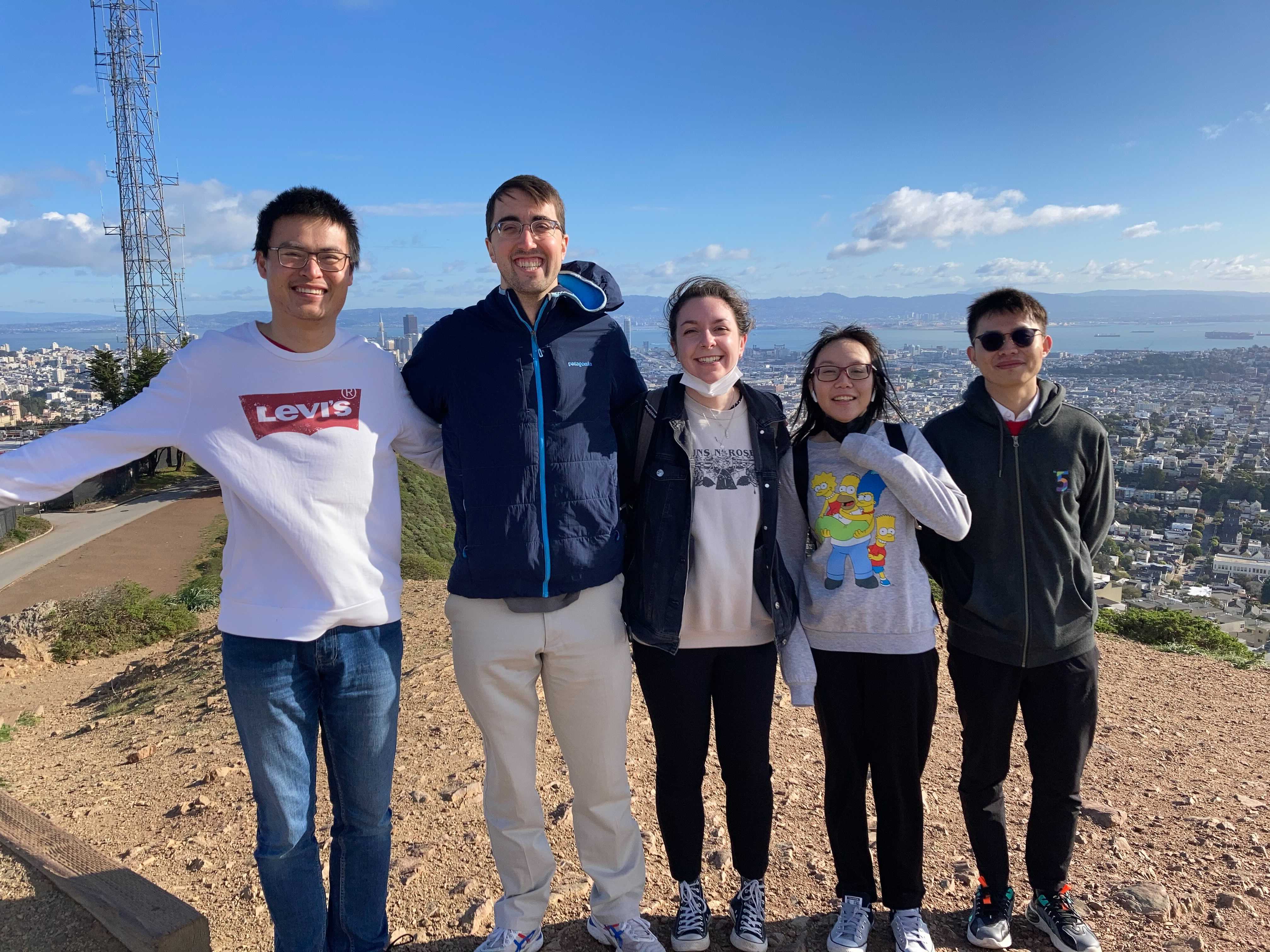
<p><img src="/images/bps_sf_4.jpg" height="200" width="600" /><br />
<em>Chen lab members at the peak of the Twin Peaks (It’s freezing…)</em></p>]]></content><author><name>Jian Huang</name><email>jianhuang@umass.edu</email></author><category term="meeting" /><summary type="html"><![CDATA[The Biophysical Society (BPS) annual meeting is held by international biophysics society, aiming at leading, disseminating and advancing knowledge in biophysics.]]></summary></entry><entry><title type="html">Jian’s arrival at U.S.</title><link href="https://huang-jian.com/posts/2021/08/arrival/" rel="alternate" type="text/html" title="Jian’s arrival at U.S." /><published>2021-08-01T00:00:00-04:00</published><updated>2021-08-01T00:00:00-04:00</updated><id>https://huang-jian.com/posts/2021/08/blog-post-1</id><content type="html" xml:base="https://huang-jian.com/posts/2021/08/arrival/"><![CDATA[<p>After a year-long remote study in China, I finally arrived at U.S. and met with Chen lab members!
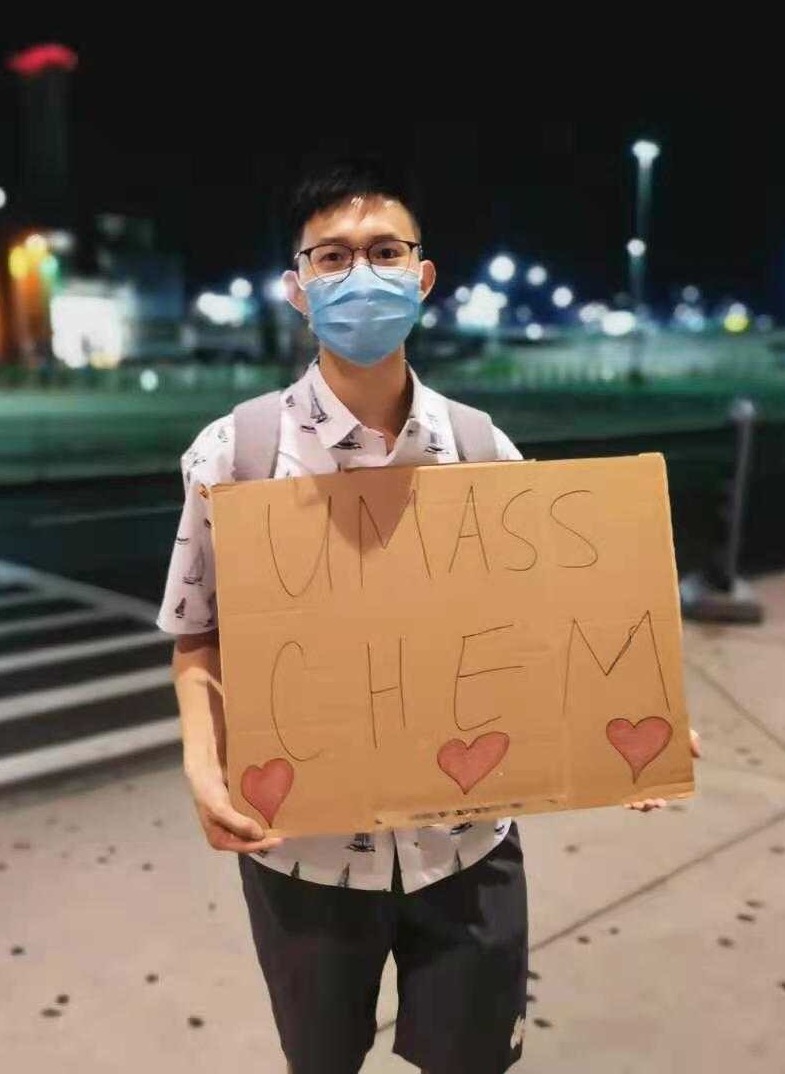
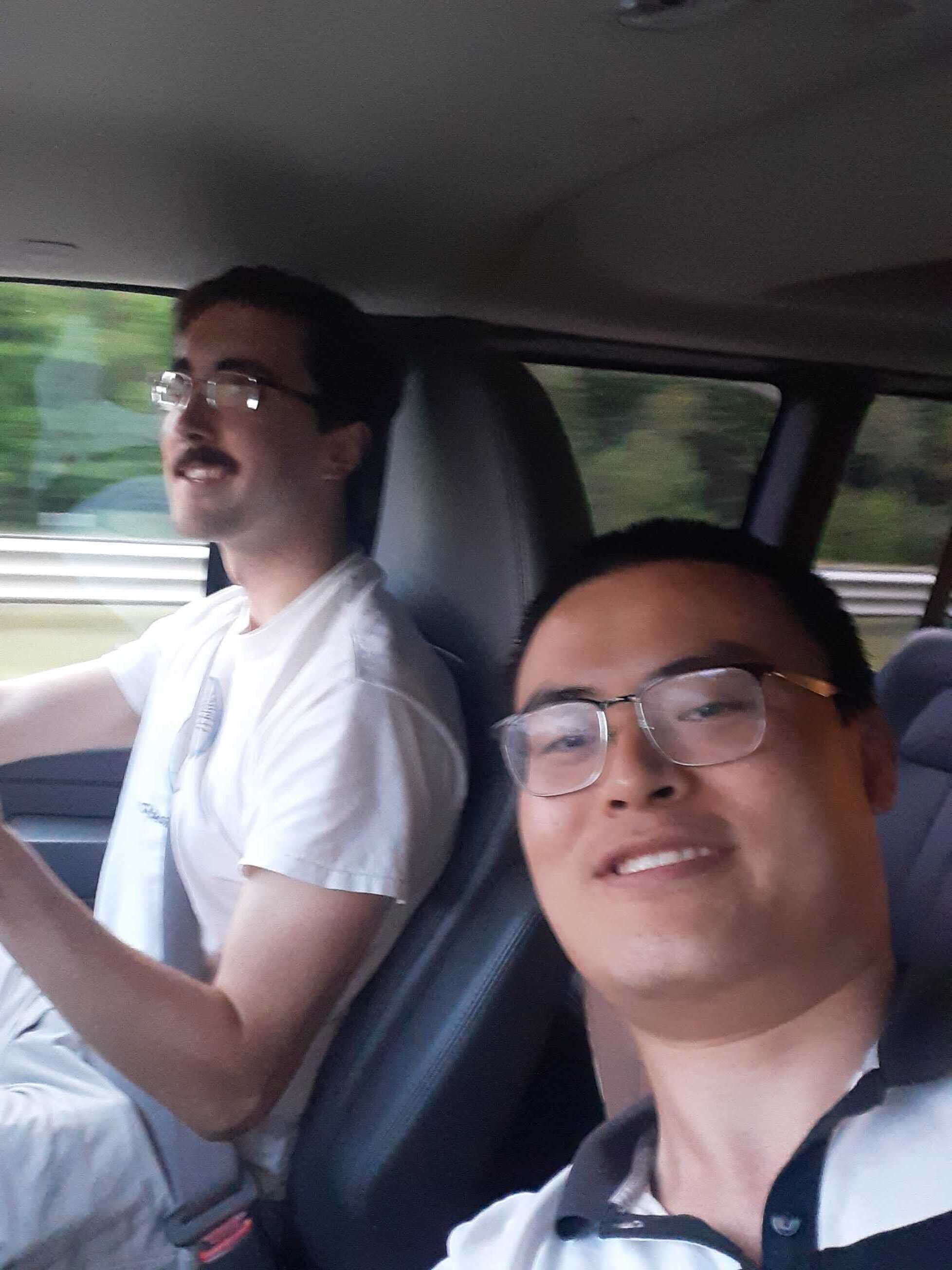
<br /><img src="/images/jian_arrival_US.jpg" width="200" /> <img src="/images/jian_arrival_US_2.jpg" width="200" /><br /></p>

<p>Thanks to Erik and Xiping’s help. In order to get me to Amherst, they rented a car. They also shared many useful tips about living in UMass. We quickly got familiar with each other and now we are good friends.
Many thanks to them again! Without you guys, the journey would never be so smooth and interesting.</p>]]></content><author><name>Jian Huang</name><email>jianhuang@umass.edu</email></author><category term="travel" /><category term="gradschool" /><summary type="html"><![CDATA[After a year-long remote study in China, I finally arrived at U.S. and met with Chen lab members!]]></summary></entry></feed>